
About the Farm: Chapter 26
Spring and the spring
[If you’ve just found About the Farm, for the whole story, you can start at Chapter One]
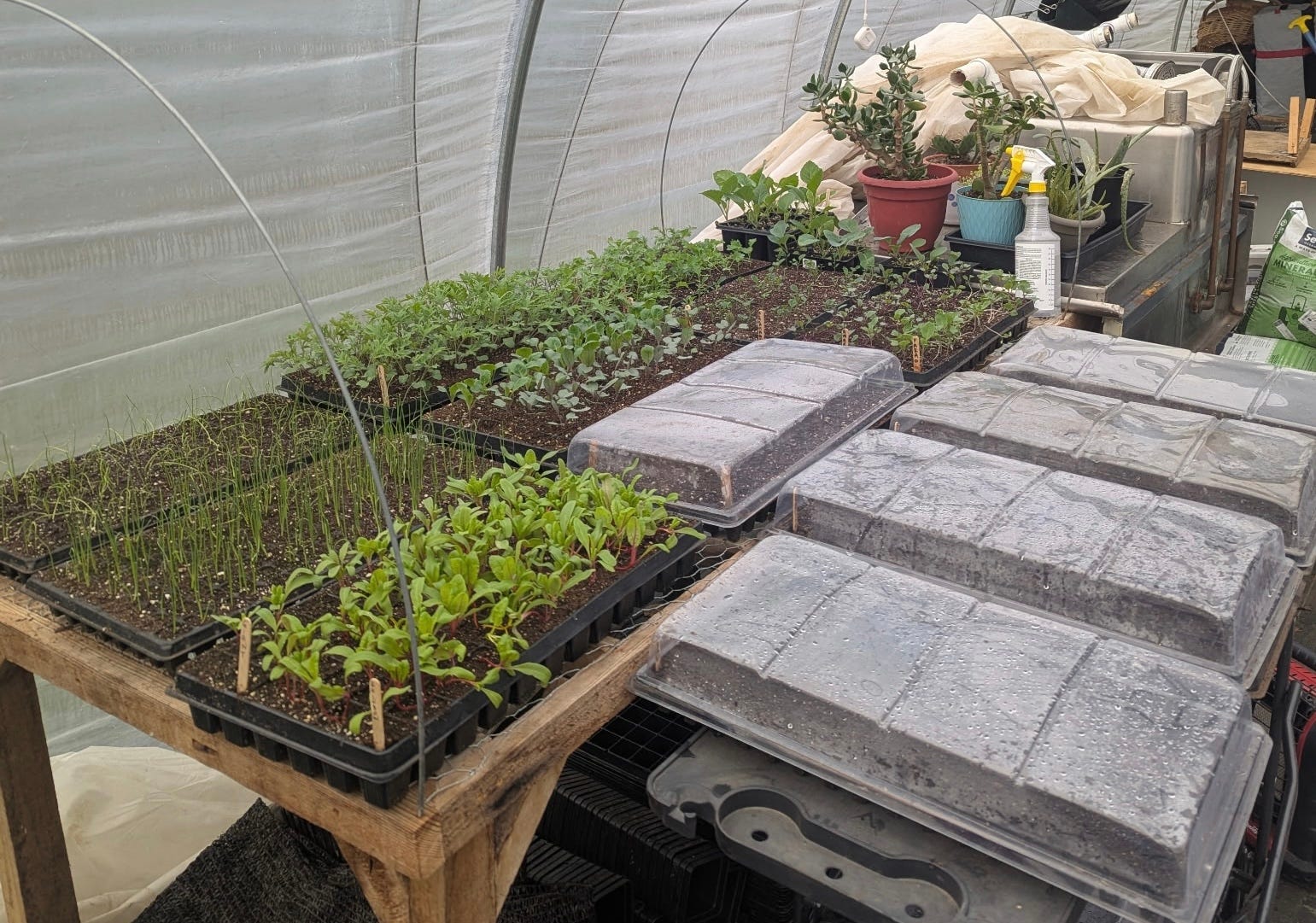
In March, as the ski season begins to wind down, Lily and Walker start seedlings under a grow light in their winter housing: onions, cabbage, kale, chard and celery.
On April 1st, a bright sunny warm day, they move back to the farm with the newly sprouted seedlings in tow. The hoop house fills with greenery and awaits the right time to plant. On April 8 there is one more big snow storm, but after that things warm up nicely.
Because of the severe drought of the last season, several nearby vegetable farms have installed irrigation. The Creekside farm does not yet have a water source, so irrigation is not an option.
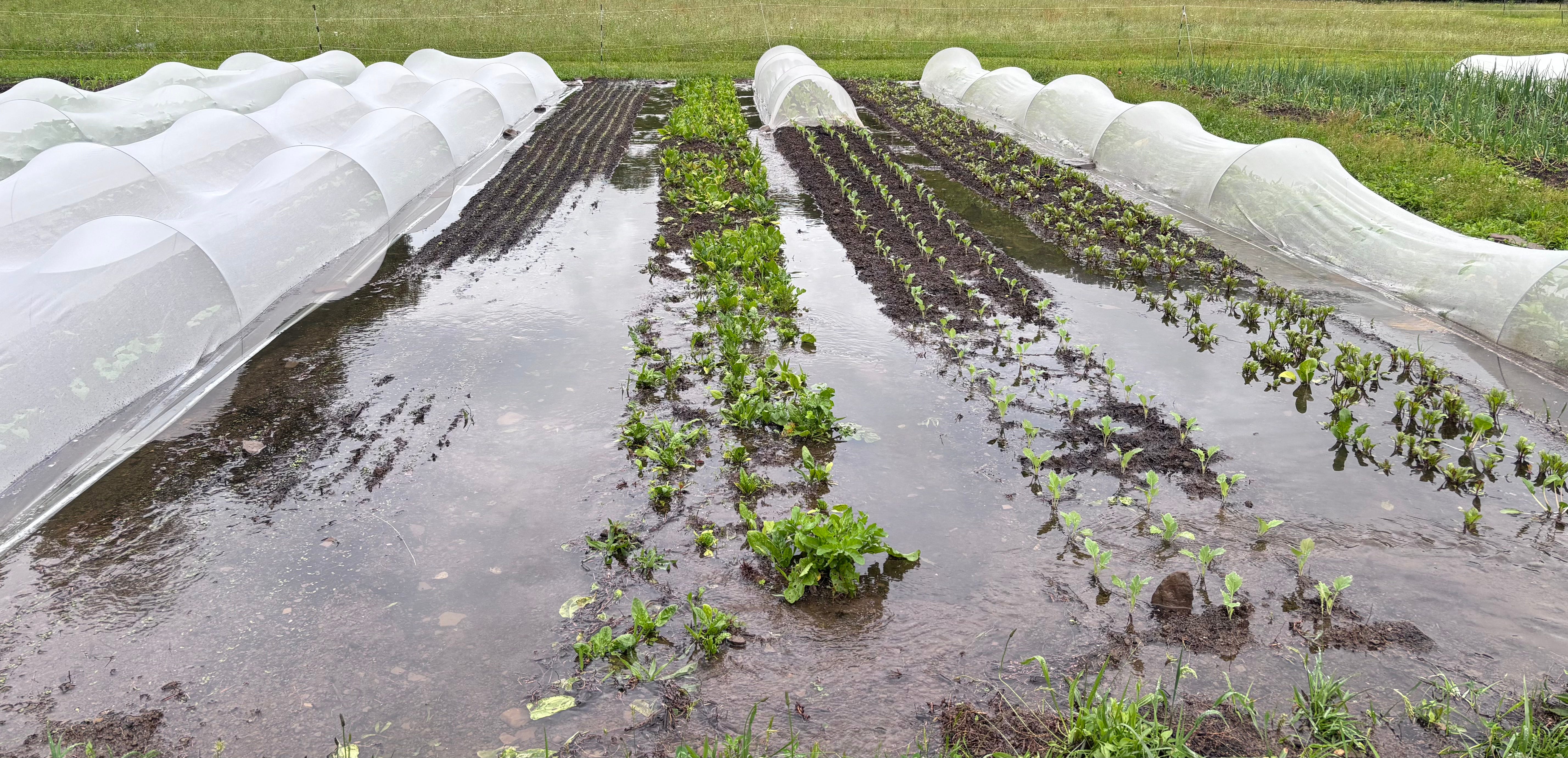
However, this spring, irrigation is not necessary. In fact, it turns out to be one of the wettest spring seasons ever. Nearby farms are flooding and losing crops as a result. Walker and Lily do all of their growing in slightly raised beds, and this protects most of their crops from the floods, though they do lose a small section of potatoes and their first planting of beans.
They are also using minimal till methods. If a cover crop has not totally winter killed, they cover the beds with big silage tarps for a month. When they pull back the tarps, they simply need to hoe any straggler weeds, then add compost and amendments, and mix with a shallow harrowing.
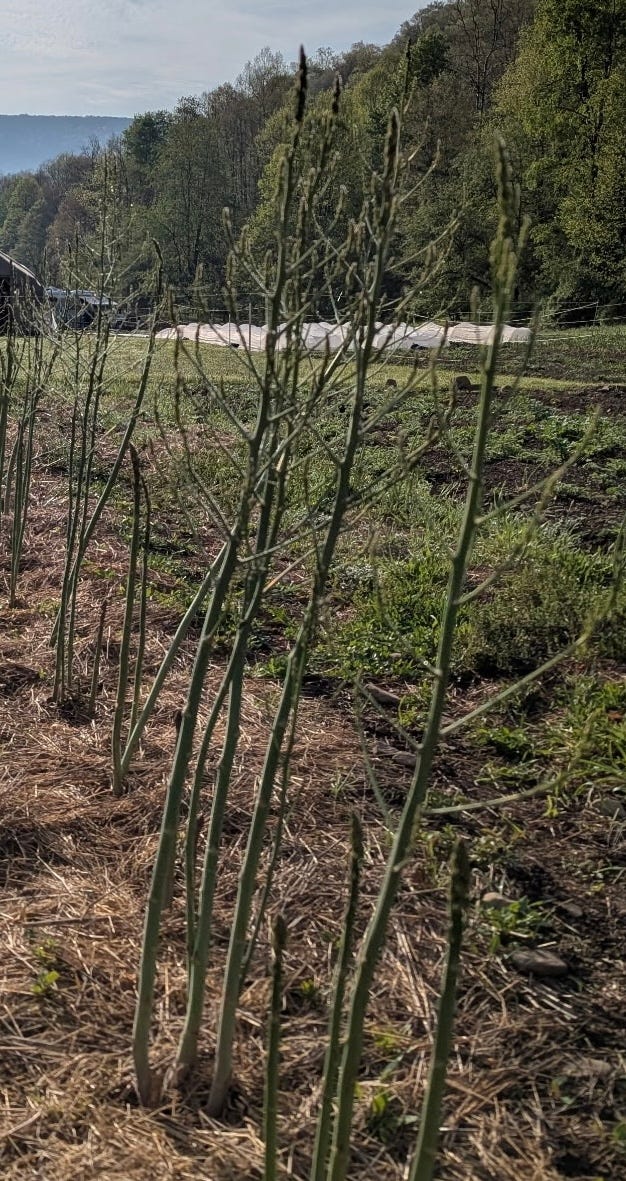
As the springtime weather warms, the garlic sprouts green and the asparagus grows tall. It is super tempting to snap off an asparagus spear, but this year it is still being allowed to grow and get stronger.
Walker and Lily have planned their crops to serve the two weekly markets, Fairfield and Peabody, and this year they will be the sole provider of 8 to 10 different veggies (a $25 value) for 15 families every week for a local Farmacy program. Their goal is to double their sales this year over last year.
The Peabody market is not nearly as busy as the Fairfield market, but there are seniors who come wanting to use their senior food vouchers. The USDA has switched the vouchers to an online-only system, and market farmers need to go through training in order to be able to accept them. The other farmers at the Peabody market have not done the training, so Walker and Lily are the only ones who can take the vouchers. These seniors are the happiest in summer when beans, corn and tomatoes are ready, and Lily and Walker want to be able to provide these for them.
There was much excitement last fall when they uncovered the old well and watched it fill up with beautiful clear water. However, the health department says they can not test the well water unless it is coming out of a spigot.
Since Jim and I have abandoned our failed spring box in favor of a rainwater catchment system, Lily comes over to gather our pump and as much of our tubing as she can pull out of the ground. Still, the pump needs electricity to function. They are running their lights, high tunnel fans, and the water pump for the bus off of just a few solar panels. The solar panels can not also handle a water pump from the well, 300 feet away. The well will have to wait.
Last year, Walker and Lily noticed a pretty good stream of water running down the hill near the garlic beds. This year, with all the spring rains, the flow is even stronger. Walker decides to see if he can make this into their water source.
He follows the stream up to what he thinks is the source, about 75 feet up from the tree line, and digs into the hill. He finds a rock shelf with water coming out between rocks. He manages to dig a little depression and create a dam. This little well fills up quickly.
Walker inserts the black tubing from our old spring system into the dammed up area so that the water can run down the hill to their 330 gallon storage tank. The tank fills in a few hours and voila, they have their own water system. Now, instead of regularly carting their storage tank into town to fill up, they are able to fill it right there on the farm. This water can be used to water seedlings, wash dishes, and shower. It gets a little muddy when it rains, but the spring continues to flow until late summer, and it is much easier than going so often to the town pump.
The chapters continue: Chapter 27
About the Farm: Chapter 27

[If you’ve just found About the Farm, for the whole story, you can start at Chapter One]
So glad they found a water source and don't have to go to town for water! It's a slow and steady process of figuring it out and setting everything up (and there are far too many hoops to jump through with the "government"! Ugh!) but slow and steady will win the race. Turtle Acres, lol. ;-)
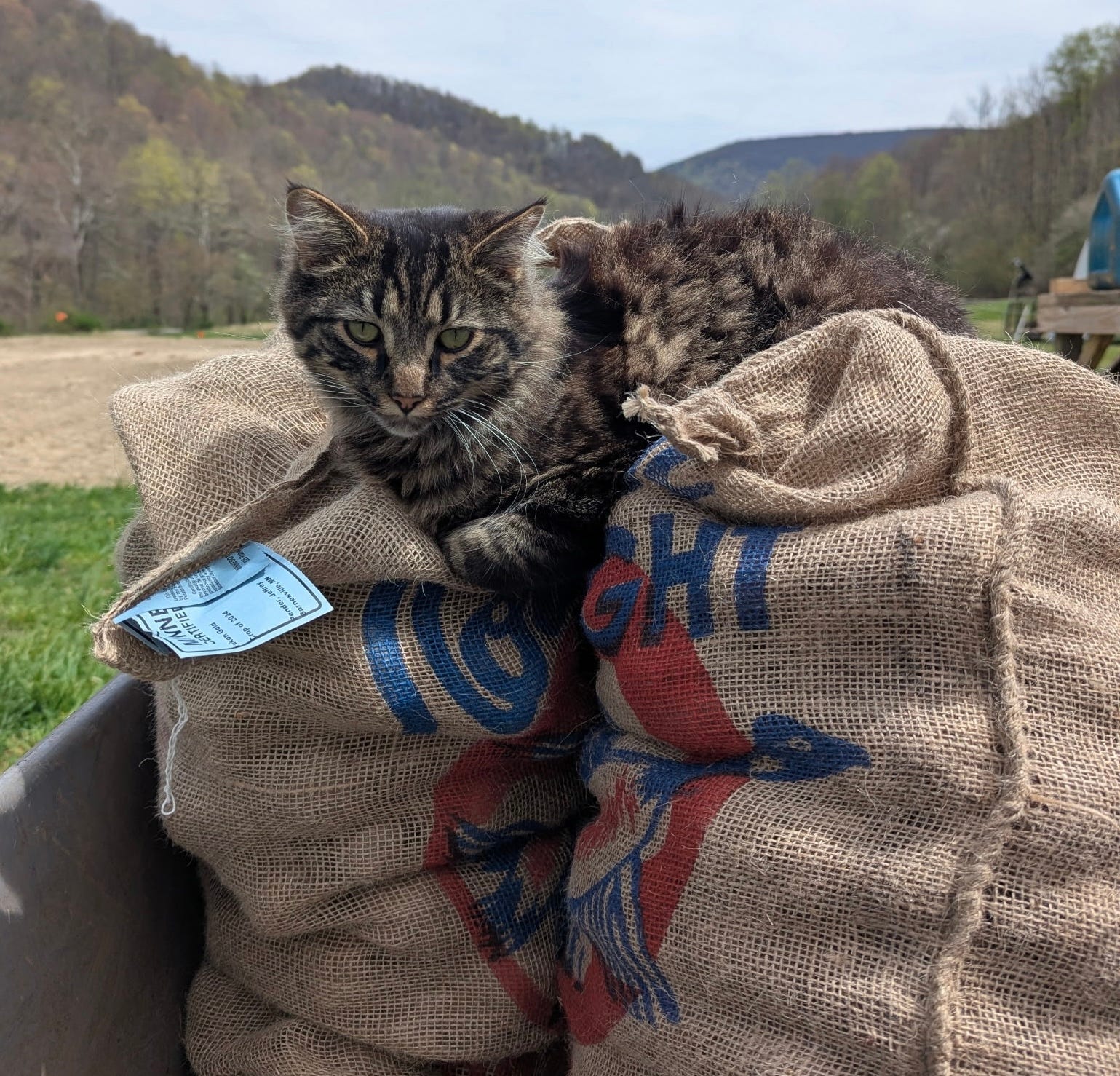
It's the picture of Bee on the sack of potatoes that does it for me!